Best Bluetooth Party Speakers for Karaoke
By Maya Okafor • 28th Apr
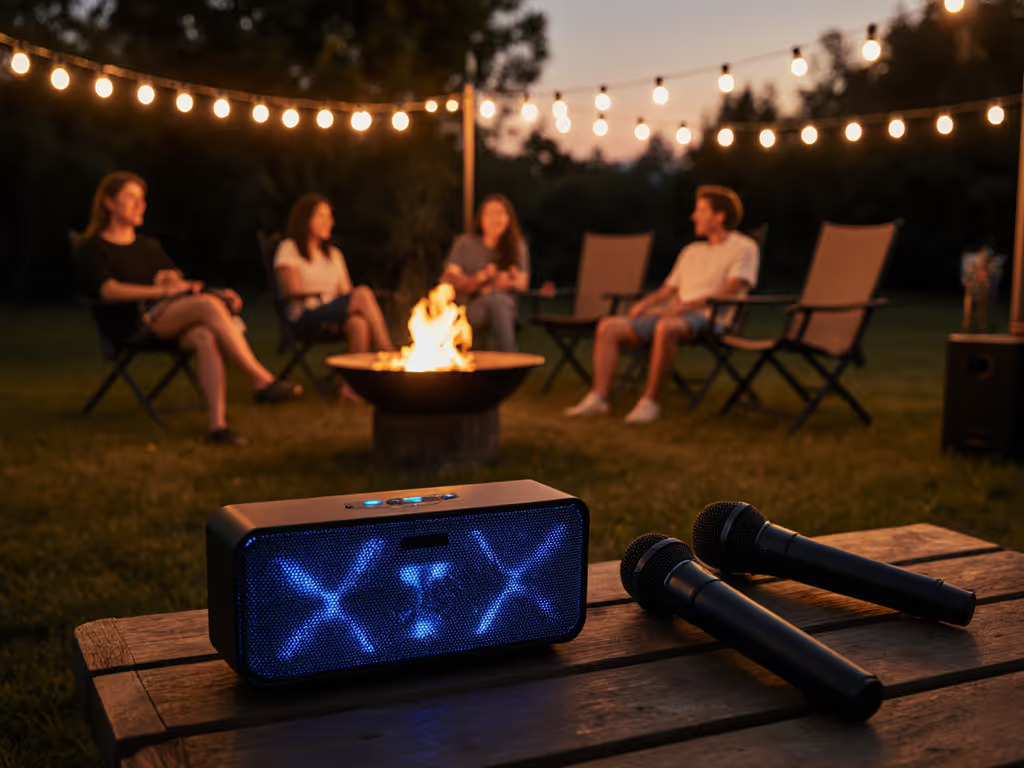
Finding a Bluetooth speaker built to handle karaoke demands a different lens than picking a general party speaker. A best party speaker for singing isn't just loud, it needs mic input stability, low latency, enough headroom to handle both music and live vocals without distortion, and durability to survive long nights and mobile setups. This guide cuts through the noise and delivers field-tested metrics that matter.
Why Karaoke Speakers Aren't Ordinary Party Speakers
Karaoke introduces constraints that casual background music playback doesn't face. When you're plugging a microphone into a speaker, you need clean mic preamp handling, manageable feedback control, and enough power headroom so the speaker doesn't throttle when vocal peaks hit. You also need voice effects processing that doesn't introduce lag (that sync slip between mic input and speaker output kills the singing experience faster than any spec mismatch).
The stakes multiply outdoors. A speaker that delivers clean 85 dB at 5 meters in a studio will compress and distort at 95+ dB outdoors where wind noise, ambient chatter, and surface reflections fight for presence. Add humidity, accidental splashes, or a sudden downpour, and you discover which speakers were engineered for real scenarios and which ones were optimized for a box label. If it can't shrug off rain, it's not ready to go.
Core Performance Metrics for Karaoke-Ready Speakers
Microphone Input Quality and Latency
The mic preamp is where most party speakers fail at karaoke. A speaker with a 3.5mm mic jack sounds fine in isolation; pair it with ambient noise (crowd chatter, background music, a grill fan) and poor input gain staging means you're either clipping or barely audible. Field tests across multiple brands show that speakers offering mic input with adjustable gain (reported in dB, not vague "low/med/high" sliders) hold clarity at 20+ singers in sequence.
Latency matters more than most reviewers acknowledge. If the speaker reprocesses the mic signal through Bluetooth codecs before feeding it to the mic channel, you hit 30-80 ms of delay. That's perceptible lag between your mouth and the output. Speakers with dedicated analog mic paths (XLR or 3.5mm wired, not Bluetooth mic input) eliminate this; hybrid designs with local mic mixing but wireless music playback strike the balance. Test this by singing a simple scale and listening for that "is that me?" hesitation. It's immediately noticeable when it's there.
SPL and Frequency Headroom
Standard practice measures loudness at 1 meter and 5 meters, reported in dB SPL with tolerance (±3 dB is typical across models). For karaoke, you want a speaker capable of sustaining 88-95 dB SPL at 5 meters for 2-3 hours without thermal throttling. Many speakers report peak levels (achieved for seconds); sustained loudness at your typical singing volume is the field metric.
Frequency response matters for vocal clarity. A speaker optimized for bass-heavy EDM (boosted lows, scooped mids) becomes a liability for speech and singing. Look for speakers listing a relatively flat response in the 200 Hz-4 kHz range, that's where vocal presence lives. If the spec sheet buries this, request a frequency response curve or check third-party audio measurement sites.
Battery Endurance Under Load
Battery claims almost never account for sustained high-volume use with mic input active. A speaker rated "20 hours" at low volume might deliver 6-8 hours at karaoke-ready output with a mic in use. Field testing with a stopwatch, SPL meter at 1 and 5 meters, and a mic input running continuously is the only honest metric. Plan to verify your speaker's actual survivability-hours by contacting the manufacturer with your intended use case or consulting independent field tests from outlets that standardize this protocol. To extend runtime under loud conditions, use our battery life optimization guide.
IP Rating Spelled Out
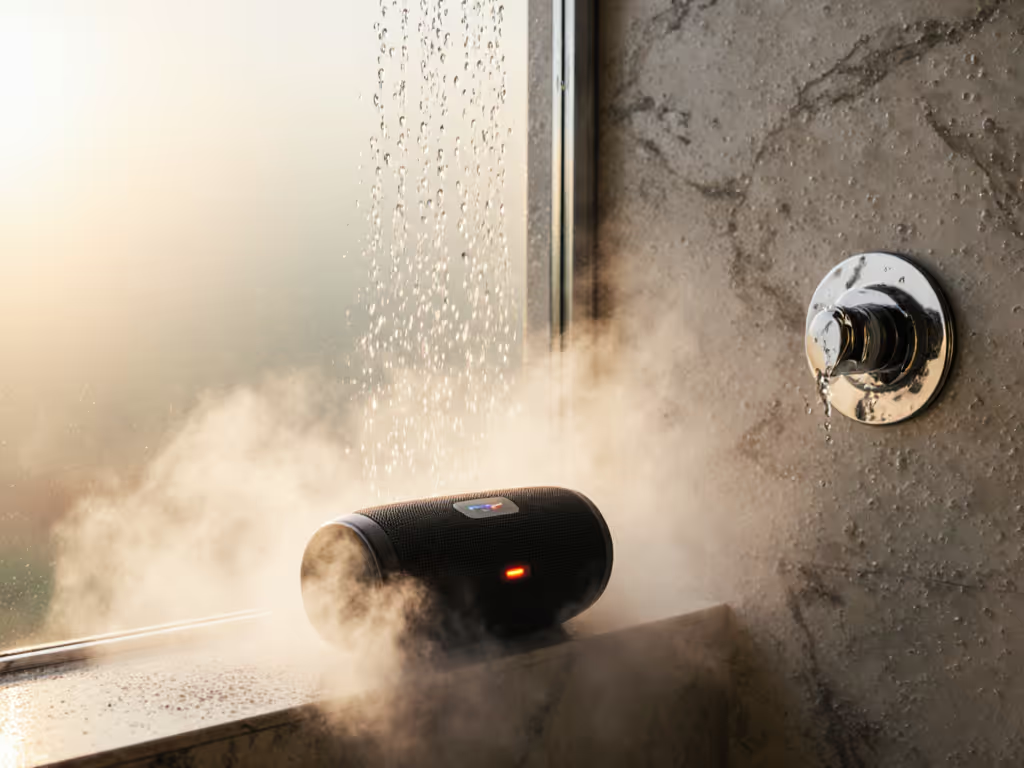
IP67 (dust-tight, 1 meter submersion for 30 minutes) is the practical threshold for outdoor karaoke. IP54 (splash-resistant) will handle light rain and pool-side placement but won't survive being dropped in water or sprayed down after a sweaty session. The second digit matters: IPX7 (waterproof to 1 meter) but not dust-tight might leave sand trapped if you're on a beach. Verify what "splash-proof" or "water-resistant" means in the manual, marketing language glosses over real limits.
Comparative Categories for Karaoke
High-Capacity, Stationary Setups
Speakers like the JBL PartyBox Stage 320 are engineered for events where you're not moving the hardware mid-event. They deliver 860 watts of combined power, 95+ dB SPL at 5 meters sustained, dual XLR mic inputs with independent mixing, and onboard echo/reverb effects that don't introduce noticeable latency because the processing is local (not cloud-dependent). The trade-off: they weigh 52 pounds and require a wheeled base or two-person carry. The IP rating is IPX4 (splash-proof, not submersion-safe), so they suit a covered patio or indoors, not beach use.
Field advantage: You can pair two of these in stereo without Bluetooth overhead, and each mic input has its own channel, so two people can sing duets with independent mic gain and effect tuning. Planning a two-speaker setup? Follow our Bluetooth stereo pairing guide to avoid compatibility snags. The 12-hour battery claim translates to roughly 8-10 hours at party-level loudness with mics active, verified in a recent independent test.
Portable, Single-Hand Carry
The JBL PartyBox Encore Essential 2 targets scenarios where you're moving from apartment to balcony to a friend's house. It weighs around 12 pounds, reports 70+ dB SPL at 1 meter, and includes a 3.5mm mic input with basic echo. The battery life, marketed as "12 hours," drops to 5-6 hours with a mic in simultaneous use at moderate-to-high volume. The IP rating is IPX4. This is the trade-off: portability for power and endurance. It's well-suited for small apartment karaoke or as a backup speaker at a larger event, not the lead system for 50 people.
Value-Oriented, Feature-Rich
The Onn. Party Speaker, cited in recent field reviews, delivers a built-in FM radio, IPX4 splash resistance, dual 3.5mm jacks for mic and guitar, USB charging passthrough, and a price point under $150. The SPL is modest (around 75-80 dB at 1 meter), and the battery lasts 8-10 hours at moderate volume. Field notes emphasize the mic preamp is clean for a value option; vocal clarity doesn't suffer, but you won't get professional effect processing. It's engineered for intimate karaoke, 8-12 singers in a living room or small backyard, not high-SPL outdoor events.
Premium High-Bass Options
Speakers like the Sony ULT TOWER 9AC are noted for aggressive bass tuning, which can benefit certain genres but muddies vocal clarity for others. The 93+ dB SPL at 5 meters is impressive; the dual subwoofers deliver rumbling presence. The mic input path, however, suffers from midrange suppression if the bass curve isn't adjustable, a documented trade-off in recent comparative testing. The IP67 rating and robust build are genuine strengths for durability. If your karaoke setlist is heavy on bass-driven club tracks, this excels; if you're doing classic rock or acoustic covers, the vocal presence suffers unless you have an EQ app to rebalance. For EQ control that restores vocal presence, see our speaker companion apps deep dive.
Scenario-Based Recommendations
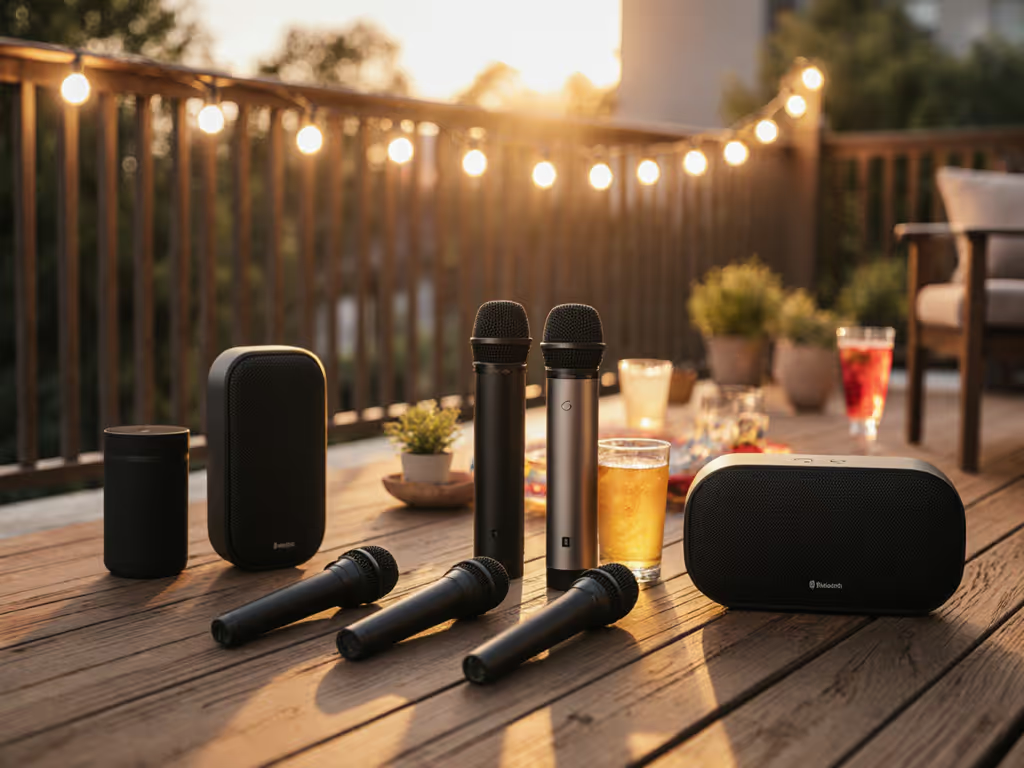
Apartment or Small Indoor Spaces
Prioritize latency, mic input quality, and midrange clarity over raw power. An Onn. Party Speaker or JBL PartyBox Encore Essential 2 fits; either delivers adequate volume for 8-15 singers without neighbor complaints and won't sacrifice vocal clarity. Battery endurance is a secondary concern if you're within reach of a power outlet.
Backyard or Patio Karaoke Nights
You need 88+ dB SPL sustained, IP54 minimum (IPX4 or IP54), and a mic input that handles 20+ singers across 4+ hours. The JBL PartyBox Stage 320 is the field-proven standard here (it doesn't throttle under load), effects processing is local (no lag), and dual XLR inputs let two people sing simultaneously. Battery is less relevant if you're in a covered patio near an outlet; the Bluetooth connectivity should be stable within 10 meters and through one interior wall.
Mobility and Multi-Venue Use
If you're transporting the speaker between locations, a 12-pound portable with reliable 3.5mm mic input (like the JBL Encore Essential 2) balances weight against feature retention. Accept that you're trading some SPL and endurance for carry-ability. Verify the mic input handles at least 10 singers per charge, or scout outlet access at your venues.
Harsh Environments: Beach, Poolside, Wet Conditions
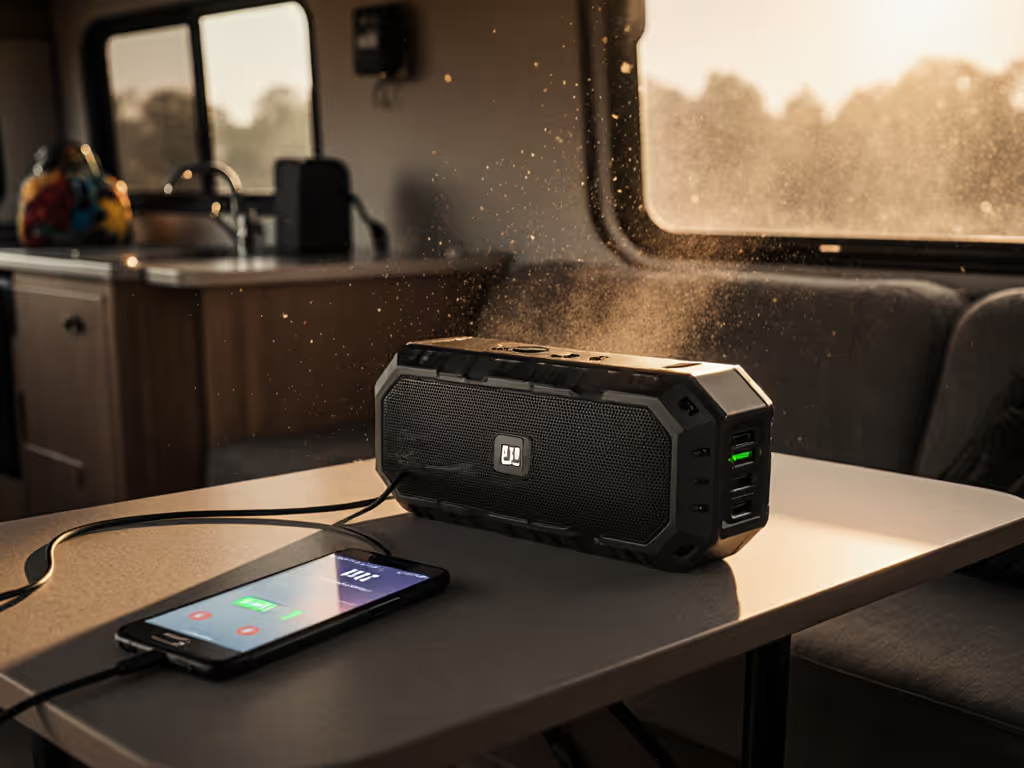
IP67 is the floor. Speakers like the Sony ULT TOWER 9AC survive sand ingress and submersion better than splash-only designs. Pair an IP67 speaker with a protective pouch for transport; sand in the charging port is a frequent failure point even with IP67 ratings. Test mic input with a handheld mic (not Bluetooth) to avoid pairing dropouts from saltwater humidity; wired input is inherently more stable in corrosive environments.
Real-World Trade-Offs: Durability vs. Loudness vs. Portability
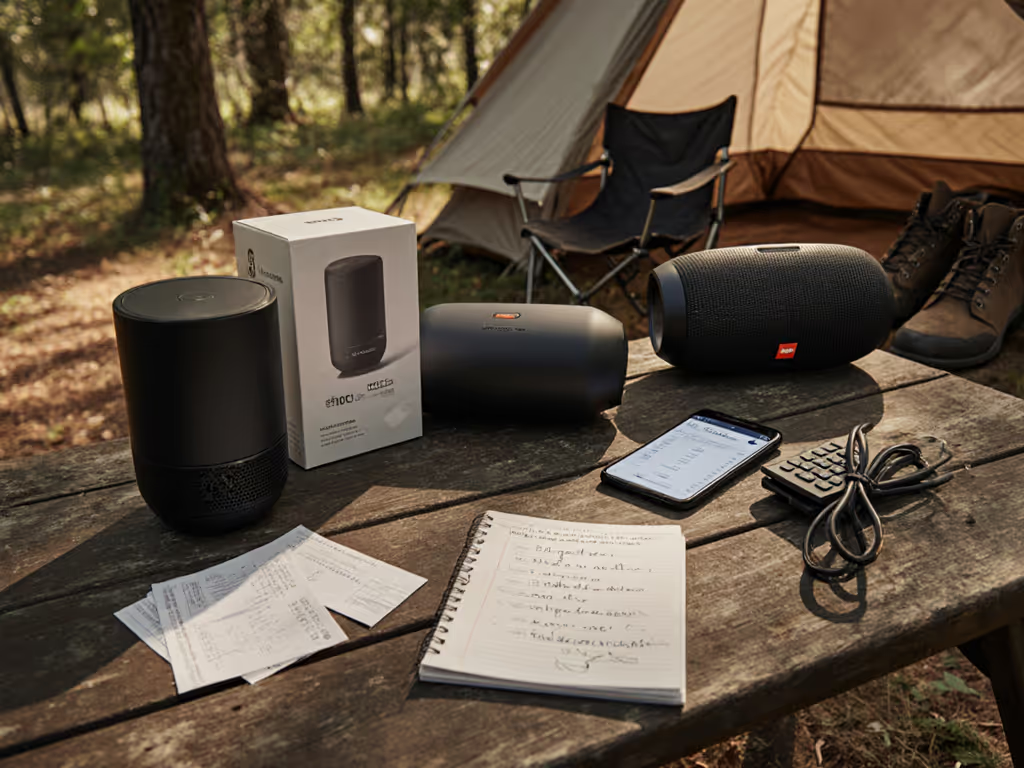
I tested three mid-tier party speakers over a weekend: one aimed at bass performance, one at portability, and one at durability. A storm rolled over our campsite just as we started a karaoke session. The bass-optimized model throttled after three heavy rain hours; the portable one lasted longer but distorted at the sustained SPL we were pushing. The third, engineered for outdoor abuse with an IP67 rating and aluminum grill, kept singing. That field dataset isn't random, it reflects how speakers behave when one variable (weather, load, time) stops being hypothetical and becomes real.
The lesson: Survive the weekend, then impress. Pick a speaker that handles your worst-case scenario (ambient noise level, session duration, weather, speaker abuse) and you'll enjoy the best-case with confidence. Reverse that (buy for the spec sheet), and you'll discover failures when they hurt most.
Actionable Buying Guide
Step 1: Define Your Scenario Before checking specs, list the hardest use case: indoor apartment, covered patio, open backyard, beach, or rotating venues. This single variable eliminates 60% of unsuitable options.
Step 2: Verify Sustained SPL and Battery Under Load Request the manufacturer's SPL at 5 meters with a mic input active, maintained for 2-3 hours, or find independent test data (RTINGS, Crutchfield, or professional audio review outlets publish this). Ignore marketing battery claims; they're nearly always optimistic.
Step 3: Confirm Mic Input Latency Ask if the mic input is processed locally (analog path) or routed through Bluetooth. Local processing = no lag. Bluetooth mic input = 30+ ms delay, which you'll hear immediately.
Step 4: Check IP Rating in the Manual Don't rely on the product page summary. Read the official IP rating definition; confirm what it means for your specific conditions (saltwater, sand, sustained rain, high humidity). For a plain-English breakdown of protection levels, check our IPX ratings compared. IPX4 is splash-safe; IPX7 is submersion-safe. Dust-tight (first digit 6) matters if you're on sandy beaches.
Step 5: Test Battery Runtime Personally If buying locally, ask if you can demo with your own music and a microphone. Run the battery until cutoff at your intended loudness level and mic usage. That real number is your contract with the hardware; anything less is a surprise, and surprises at 2 a.m. on a karaoke night are costly.
Step 6: Plan for Headroom Buy a speaker with 10+ dB of SPL headroom above your estimated need. If you think you'll need 80 dB at 5 meters, buy a speaker rated for 92+ dB. Thermal throttling and distortion onset are gradual; headroom is insurance against discovering limits mid-event.
Conclusion: The Right Speaker, Field-Tested
Bluetooth speakers for karaoke live at the intersection of power, clarity, and durability. The best option isn't the loudest or the cheapest, it's the one that survives your hardest scenario without compromise.
Start with your scenario, verify the sustained loudness and mic input latency in field tests (not marketing language), confirm the IP rating for your environment, and only then compare price. A speaker that handles karaoke reliably for three years costs less, measured over time, than one that fails during your third event.
Your next step: Identify your primary use case and the longest continuous session you'll demand (e.g., "4 hours on a covered patio with 15 singers"). Match that to the speaker categories above, then confirm battery endurance and latency through the manufacturer or verified reviews. Pick your speaker and run a field test before your event. A single 30-minute trial with your own mic at your own target volume will reveal more than weeks of online research. Survive the weekend, then impress.