Bluetooth Speaker Total Cost of Ownership
By Omar Haddad • 23rd Feb
When you're shopping for a Bluetooth speaker total cost of ownership, the sticker price whispers louder than the three-year reality. Most buyers reach for the cheapest option or assume premium brands always justify their tag. Neither assumption holds up when you run the actual numbers. The real measure of value isn't what you pay at checkout; it's what you spend per month of reliable use, factoring in battery life, durability, replacements, and whether the thing still sounds decent when you need it most.
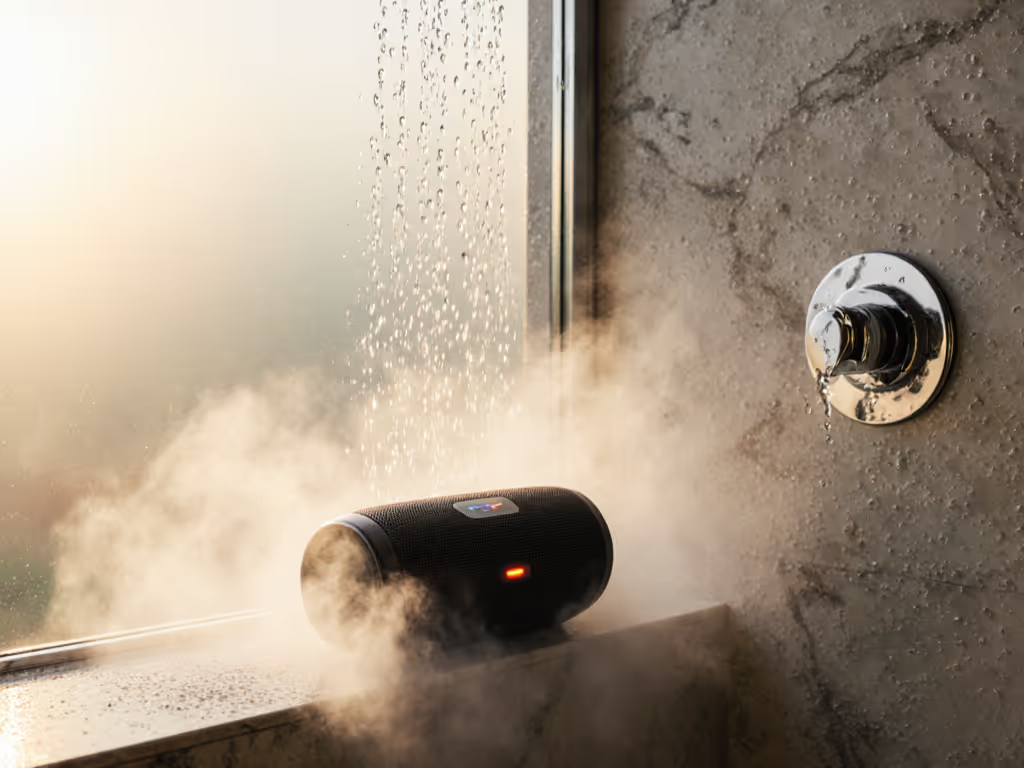
My aunt learned this the hard way. She wanted calm background music during showers without the fuss of installing anything permanent or dealing with a tangle of wires. We grabbed a waterproof, non-slip shelf, an IPX7-rated speaker with two labeled buttons, and set the volume cap to avoid echoes off the tiles. Two years in, she's still using it every morning. No repairs, no replacement, no regrets. The initial spend was moderate, but the peace of mind it delivered (and the cost per use) turned out to be a bargain. Small tweaks, big routine wins perfectly describes why that speaker earned its place.
This guide walks through the hidden expenses, lifespan math, and practical scenarios that separate smart purchases from buyer's remorse. Whether you're equipping a bathroom, patio, or campsite, understanding long-term speaker value helps you stop throwing money at annual upgrades.
1. The Replacement Trap: Why Cheap Can Cost Triple
A $25 speaker replaced annually costs $75 over three years and generates more waste. That's the math sustainability researchers have flagged (and it's worth pausing on). Budget models average 12-18 months before batteries swell, adhesives fail, or drivers rattle loose. Premium speakers, when maintained, last 3-5 years.
Here's the scenario: You buy a $30 speaker in January 2024. By December 2024, it's struggling. By mid-2025, it's dead. You buy another. By late 2025, same story. By early 2026, you've spent $90 and have three electronics heading to a landfill. A single $90 model, bought once in 2024, is still working in 2026 and has cost you about $45 per year, instead of repeating $30 purchases and the hassle that comes with them.
The trap isn't the initial price tag. It's the hidden tax of repeated purchasing decisions, setup time, and the mental load of "Is this the speaker month again?"
2. Battery Economics: Runtime Doesn't Equal Real-World Use
Manufacturers quote battery life in ideal conditions: low volume, perfect Bluetooth range, climate-controlled lab. Real life is louder, messier, and shorter. For proven ways to extend runtime without babying the volume, see our battery life optimization guide.
A speaker claiming "12 hours" at 50% volume will die at 4-6 hours if you're playing at 80% volume outdoors or in a humid bathroom where you've cranked it to push through fan noise and steam. That's not a defect, it's physics. Higher volume draws exponentially more power.
When comparing speakers, look for specs that mention "playtime at realistic volume" or independent test results that measure runtime at 75-85 dB (typical conversation level plus a margin). The Soundcore Motion X600, Tribit StormBox Micro 2, and Edifier T10U offer documented runtimes that hold up in field tests, not just lab benchmarks. That reliability means fewer mid-day charges, fewer frustrations, and fewer speakers gathering dust because they never made it through a morning coffee routine.
3. Lifespan Economics: Cost Per Year of Ownership
Let's frame ownership as an annual expense rather than a one-time purchase.
Budget Model ($35): 14-month lifespan = $30 per year, plus new purchase friction annually.
Mid-Tier Model ($85): 3.5-year lifespan = $24 per year, with stable performance across years 1-3.
Premium Model ($180): 4.5-year lifespan = $40 per year, justified if sound quality, features, or brand reliability matter to you.
The mid-tier sweet spot is compelling because it erases the replacement cycle. You set it up once, it works reliably, and you forget about it, which is exactly what household gear should do. One less tap is one more song before work, and one less trip to buy another speaker.
4. Waterproofing Tiers: IP Ratings and Hidden Repair Costs
Not all water-resistant claims are equal, and IP ratings often confuse buyers who misread what they mean.
IPX4 = splash-resistant; suitable for kitchen splashes and light rain.
IPX5 = water-jet resistant; holds up to shower spray and poolside splashes.
IPX7 = submersion-safe up to 1 meter for 30 minutes.
A speaker rated IPX7 costs more upfront (often $30-50 more than a non-waterproofed rival), but eliminates the risk of a $70-120 repair or a full replacement if steam, accidental spill, or beach sand moisture reaches the circuitry. That upfront waterproofing premium pays itself back the moment your bathroom speaker survives its first close encounter with shower steam without crackling or dying.
Skipping waterproofing to save $20 becomes a very expensive decision the week you're hosting a pool party or the morning your partner splashes it during shower prep.
5. Connectivity Stability: The Hidden Cost of Dropouts and Frustration
Bluetooth instability is rarely mentioned in cost analyses, but it's expensive in terms of time, energy, and the urge to throw the speaker away and try something else.
Budget speakers with weak Bluetooth chipsets or poor antenna placement struggle through walls, near Wi-Fi routers, and in apartments dense with competing signals. You'll spend 10 minutes every session re-pairing, moving closer to the speaker, or swapping to a different playlist because the stream stutters. For quick wins, see our Bluetooth dropout fixes that work in real homes.
A reliable mid-tier or premium speaker pairs once and just works, even through one wall, even when your neighbor's five devices are also connected. That stability has real value: you aren't spending 45 minutes of your weekend troubleshooting audio, and you aren't replaced by a resentful family member who finds it "too annoying to use."
Reliable Bluetooth means the speaker earns its place in your routine, which extends how long you'll actually keep it (versus the emotional cost of abandoning it).
6. Accessory and Repair Availability: The Affordability of Upkeep
A budget no-name speaker rarely has replacement parts, repair services, or compatible accessories. If the battery swells, the charging port fails, or the strap snaps, you're buying a new speaker.
Established brands like JBL, Bose, Anker (Soundcore), and Tribit maintain parts inventories, support repair centers, and offer affordable swap-outs. For brand-by-brand support realities, check our warranty and repair cost comparison before you buy. A battery replacement on a Soundcore model might cost $20-30; on a nameless $25 speaker, it's impossible, so you trash it.
When evaluating cost of ownership, check whether replacement batteries, charging cables, and protective cases are available at reasonable prices. If they're not, the speaker is essentially disposable, and the three-year cost of ownership balloons if you need three of them.
7. Use-Case Longevity: Context Determines How Long You'll Actually Use It
A $40 speaker in a child's room has a fixed lifespan: the child ages out of it, or it gets dropped. A $120 speaker in the same room might collect dust for years before the next kid inherits it, or it might stay employed longer and deliver true value.
Conversely, a $200 premium speaker bought for a permanent balcony setup pays dividends across years, seasons, and guest gatherings. But if you're buying for a dorm room you're leaving in six months, that premium spend isn't justified by ownership lifespan.
Use-case context shapes economics:
- Temporary setups (gifts, seasonal use, rentals): Budget to mid-tier ($30-70) makes sense; high risk of losing it or outgrowing the use mitigates premium investment.
- Permanent installations (bathroom, kitchen, dedicated balcony): Mid-tier to premium ($80-180) recoup their cost across years and justify the durability and stability investment.
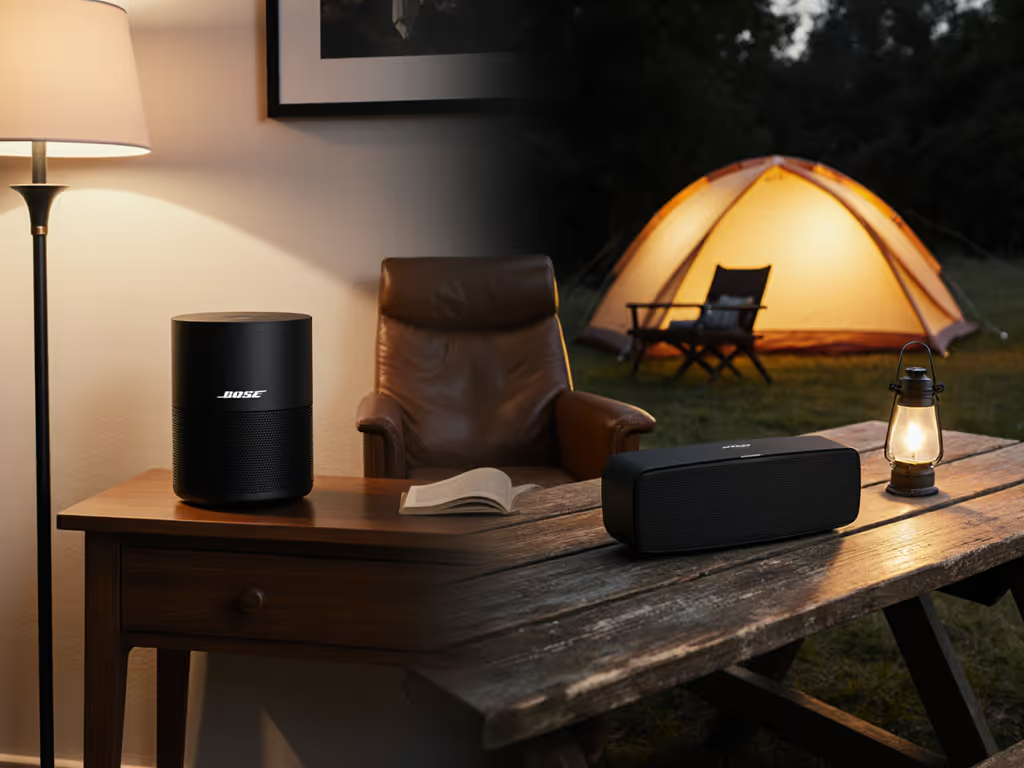
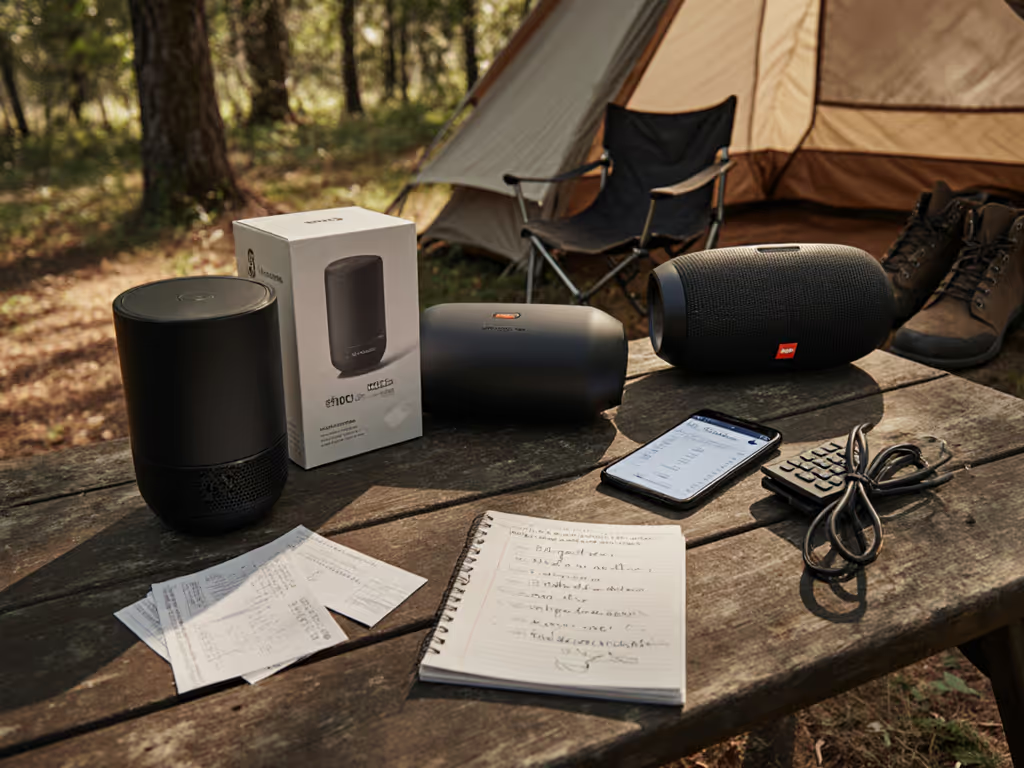
- Outdoor recreation (hiking, beach, camping): Premium or durable mid-tier ($100-150) becomes insurance against sand, salt water, and rough handling; a cheap model will fail, leaving you without audio precisely when you'd miss it most.
8. Feature Creep and Maintenance: Simplicity Lowers Total Cost
More features mean more potential failure points. A speaker with app control, multi-room sync, EQ presets, and voice assistant integration offers flexibility, but also complexity, firmware updates that introduce bugs, and more reasons for something to break.
A simple speaker with three buttons, clear labels, and predictable behavior requires zero app-based troubleshooting. It pairs once, works forever, and never surprises you with a software update that changes the button behavior or drains battery faster.
Over three years, the simplest speaker (if durable) costs less in mental energy, setup time, and frustration repair than the feature-rich model that requires tinkering.
9. Environmental and Ethical Cost: The Real Price of Disposability
A speaker destined for a landfill within 18 months carries hidden costs: mining for minerals, manufacturing emissions, shipping, e-waste processing, and the finite resources locked inside it. If sustainability matters to you, see our sustainable Bluetooth speakers guide for longer-lasting, repairable picks. When you buy a disposable speaker, you're paying not just in dollars, but in environmental debt that society absorbs.
A durable speaker, kept in active use for 3-5 years, amortizes that environmental cost across five times as many days of use. From both economic and ethical angles, a $90 speaker lasting four years beats a $25 speaker dying in one.
10. The Sweet Spot: Where Value and Performance Actually Meet
After layering in lifespan, reliability, waterproofing, and real-world runtime, the optimal speaker lifespan economics live in the $80-130 range with established value brands.
The Soundcore Motion X600, Tribit StormBox Micro 2, and Edifier T10U deliver 90% of premium-speaker performance at 40-60% of the cost, with proved durability and waterproofing that survives years of actual use. They're reliable enough to fade into your routine, affordable enough not to cause regret, and tough enough to handle showers, patios, and light travel without needing backup plans.
If budget is absolutely tight, a well-reviewed $40-50 model from Anker's Soundcore line or a comparable alternative offers solid utility for temporary or low-stakes use. But if you're outfitting a space you'll use daily for the next few years, a shower, kitchen, or favorite outdoor corner, the mid-tier investment pays dividends in stability, longevity, and freedom from replacement cycles.
Keep Exploring: The Math Behind Your Next Speaker
Next time you're comparing speakers, skip the spec sheet theater and ask three questions:
- How long will this realistically stay in my life? (Estimate years, then divide total cost by that number.)
- What will fail first - battery, Bluetooth, or something else? (Check independent long-term reviews, not marketing claims.)
- If something breaks in year two, can I repair it affordably, or am I buying a new speaker? (Look for part availability and support forums.)
The cheapest speaker rarely delivers the lowest true cost of ownership. The most expensive one often overpays for features you don't need. Somewhere in the middle, a reliable mid-tier pick from an established brand, is usually where peace of mind meets your wallet.
Small tweaks to how you evaluate speakers (focusing on lifespan, durability, and real-world reliability) lead to big routine wins: a speaker that's there when you need it, month after month, without fuss or replacement cycles.
Related Articles